
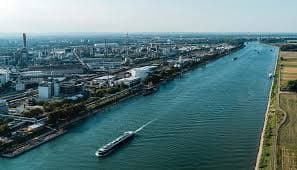
BASF’s Restructured Ludwigshafen Footprint Could Alter Regional Rail and Barge Traffic Patterns
The progressive closure of underutilized units at BASF’s Ludwigshafen Verbund site is reducing the complex’s overall material throughput. Because the site has for decades generated one of the densest concentrations of chemical freight in Europe, that contraction is expected to reshape the volume and composition of regional rail and barge traffic that evolved to serve it.
Ludwigshafen’s integrated structure traditionally moved large quantities of naphtha, intermediate streams and finished products by inland waterway and rail. Regular barge rotations on the Rhine and scheduled block trains or wagonload services formed the backbone of inbound feedstock supply and outbound distribution. Logistics providers, terminal operators and infrastructure planners sized capacity, schedules and investment around the expectation of sustained high volumes. As production units are permanently idled or consolidated, the absolute tonnage requiring transport declines, altering the economics of those services.
Shifting Volumes and Service Patterns
Barge traffic faces the most immediate exposure. Lower site demand reduces the frequency of full-load sailings and can leave operators with underutilized vessels on routes that previously enjoyed predictable chemical cargoes. Rail networks serving the Rhine-Neckar region similarly confront the prospect of fewer tank-car movements and reduced utilization of dedicated sidings and marshalling capacity. While remaining competitive units will continue to generate freight, the mix is likely to skew toward smaller or more specialized shipments rather than the bulk commodity flows that once dominated.
The change will not occur overnight. Existing contracts, inventory drawdowns and the phased nature of plant closures mean traffic will adjust gradually. Nevertheless, over a multi-year horizon the cumulative effect of a smaller production footprint is a structural reduction in baseline chemical freight demand originating from or destined for Ludwigshafen. Carriers that relied on the site’s scale for network density may need to reconfigure routes, consolidate services or seek replacement volumes from other shippers.
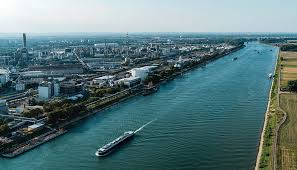
Implications for Regional Freight Infrastructure
For the broader chemical logistics marketplace, Ludwigshafen’s restructuring illustrates how production-side decisions at a single large complex can propagate into the surrounding transport system. Rail-path allocation, barge-fleet deployment, terminal investment and even local road freight patterns all respond to shifts in industrial throughput. A sustained lower volume profile could free capacity for other users, yet it may also challenge the commercial viability of infrastructure and services that were dimensioned for the site’s earlier scale.
The headcount decline at Ludwigshafen is the most visible marker of the site’s transformation; the corresponding change in rail and barge traffic will be one of its most tangible external effects. As the production footprint continues to contract, regional freight patterns long organized around the complex’s massive integrated output will adapt to a new, leaner reality.
Choline Chloride 75% Liquid CAS: 67-48-1