CATL's Jianxiawo mine setbacks have sent shockwaves through the lithium market, and chemical traders cannot afford to ignore the ripple effects. This article explains how the delays affect lithium carbonate supply, price trends and procurement planning for 2026 and beyond.
Background on the Jianxiawo Mine and Its Role in Lithium Production
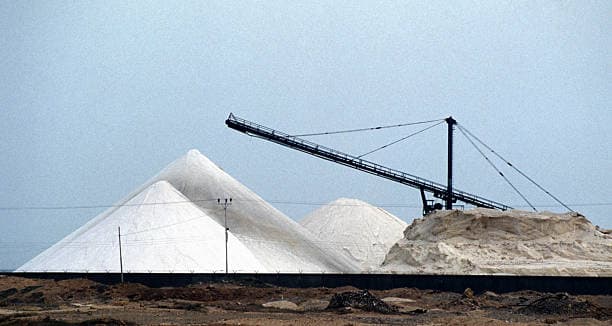
Located in the Qinghai province of China, the Jianxiawo project was slated to become one of the world’s largest hard‑rock lithium sources. CATL invested heavily, expecting the mine to feed its battery‑grade lithium carbonate plants and secure a stable upstream supply.
Technical challenges, including unexpected ore grade variations and water management issues, have pushed the commercial start‑up from the planned early 2025 date to late 2027. The delay reduces the anticipated annual output of roughly 30,000 metric tons of lithium carbonate equivalent (LCE), a volume that would have covered a significant share of Asian demand.
Global Lithium Market Size and Demand in 2026
Global lithium consumption reached 870,000 metric tons of LCE in 2025, driven primarily by EV battery manufacturing. Forecasts show demand climbing to over 1.2 million metric tons by 2026, with Asia accounting for nearly 70 percent of total use.
Supply‑side growth has struggled to keep pace. Existing hard‑rock mines in Australia and South America are operating near capacity, while brine projects face seasonal production constraints. The Jianxiawo shortfall therefore represents a material gap in the supply chain.
Key Price Drivers and Market Forces Right Now
Lithium carbonate prices have risen 18 percent since the first quarter of 2025. The primary drivers are:
- Reduced upstream output from Jianxiawo and other delayed projects.
- Strong EV demand outstripping battery cell capacity expansions.
- Increasing inventory draws by battery manufacturers seeking to hedge against supply uncertainty.
These forces combine to tighten the spot market, while forward contracts command a premium of $1,200 to $1,400 per ton compared with last year.
Top Producing and Exporting Countries
Australia remains the largest lithium exporter, supplying 45 percent of global LCE in 2025. Chile follows with 20 percent, while China accounts for 15 percent, largely from its own processing facilities.
With Jianxiawo delayed, China’s domestic processing capacity will rely more heavily on imported concentrates from Australia and Chile, increasing import volumes and logistical pressure on Pacific shipping lanes.
Applications and Who Buys Lithium Carbonate
Battery manufacturers dominate lithium carbonate consumption, but other sectors also play a role. These include:
- Glass and ceramics producers seeking high‑purity lithium compounds.
- Pharmaceuticals using lithium carbonate as a mood‑stabilizing agent.
- Lubricant additives and polymer manufacturers that incorporate lithium‑based greases.
Procurement teams in these industries must now monitor price volatility more closely and consider alternative sources or material grades.
Risks, Challenges and Regulatory Issues
Beyond production delays, the lithium supply chain faces environmental scrutiny. Chinese regulators have tightened water usage permits for hard‑rock mining, potentially adding further compliance costs.
Trade policy adds another layer of risk. Recent tariffs on Australian lithium concentrates imposed by China could raise landed costs for downstream processors, prompting a shift toward South American brine sources despite higher logistics expenses.
Outlook for 2027 and Beyond
Assuming Jianxiawo reaches commercial operation by late 2027, the market could absorb an additional 30,000 metric tons of LCE annually. This would relieve some pressure, but demand is projected to exceed 1.5 million metric tons by 2028, outstripping the combined capacity of existing mines and new projects.
Strategic diversification of supply—through joint ventures in South America, increased recycling of battery scrap, and development of next‑generation lithium extraction technologies—will be essential to balance the long‑term market.
What Buyers Should Do Now
Procurement managers should take immediate steps to mitigate risk. First, secure multi‑year contracts with reputable suppliers in Australia and Chile to lock in price and volume. Second, evaluate the feasibility of stocking higher‑purity lithium carbonate to reduce reliance on spot market purchases. Third, monitor regulatory developments in China and Australia that could affect shipping timelines.
Finally, explore alternative battery chemistries such as sodium‑ion or solid‑state technologies, which may lessen exposure to lithium price spikes over the next five years.
Looking to source lithium carbonate? Explore verified global suppliers on our platform.