Biotin CAS: 58-85-5

Biotin CAS: 58-85-5

India's medical device polymer packaging inputs (PP for syringes, PVC for IV bags, PC for connectors

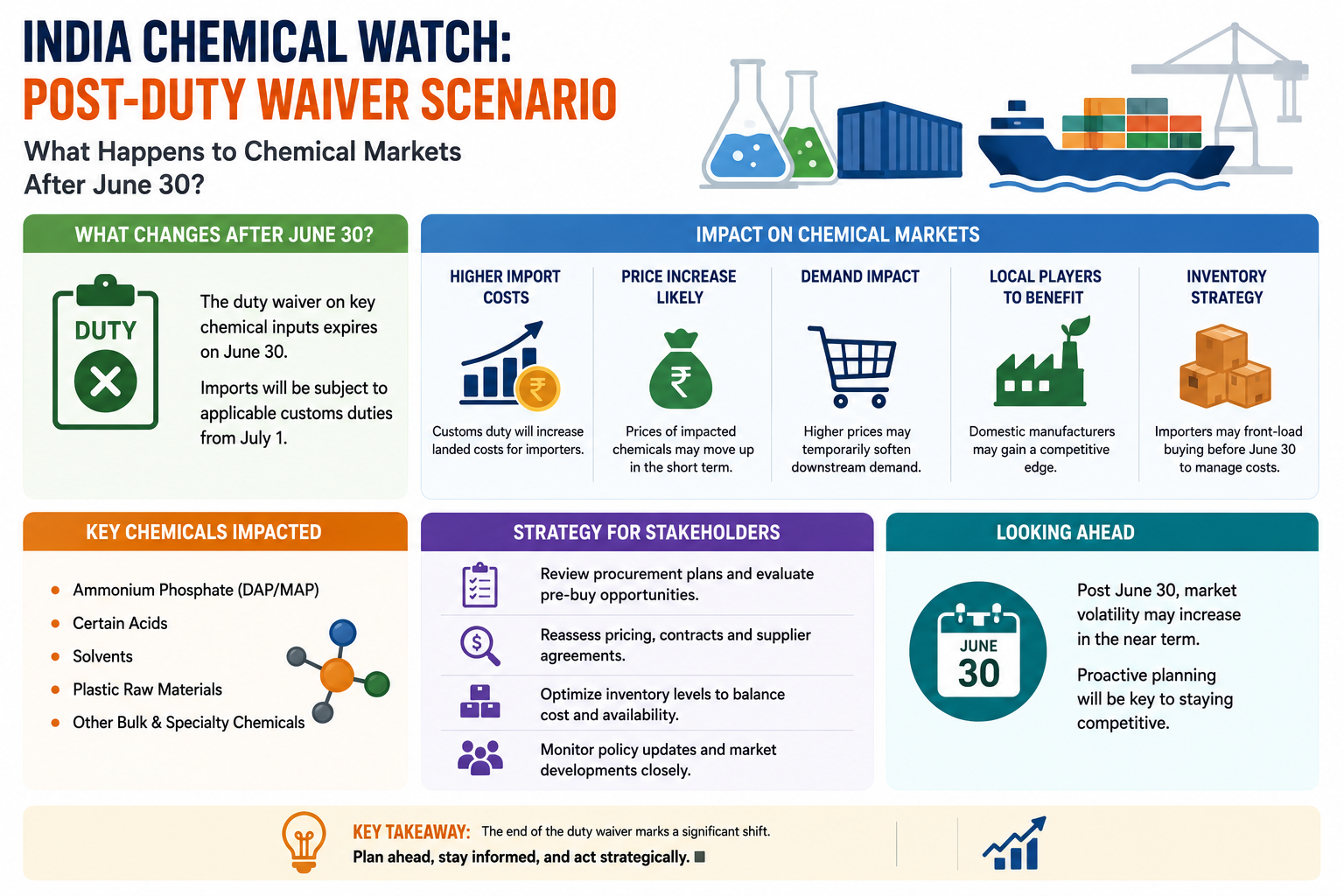
India enters its first full business week following the expiry of the customs duty waiver on key petrochemical imports. Manufacturers across plastics, textiles, pharmaceuticals and automotive supply chains are now evaluating the commercial impact as procurement costs begin adjusting to the new tariff environment.

H1 2026 closes with simultaneous trade policy changes across India, the EU and the US. Chemical procurement teams face overlapping tariff, anti-dumping and regulatory fee developments that require structured multi-jurisdiction tracking.
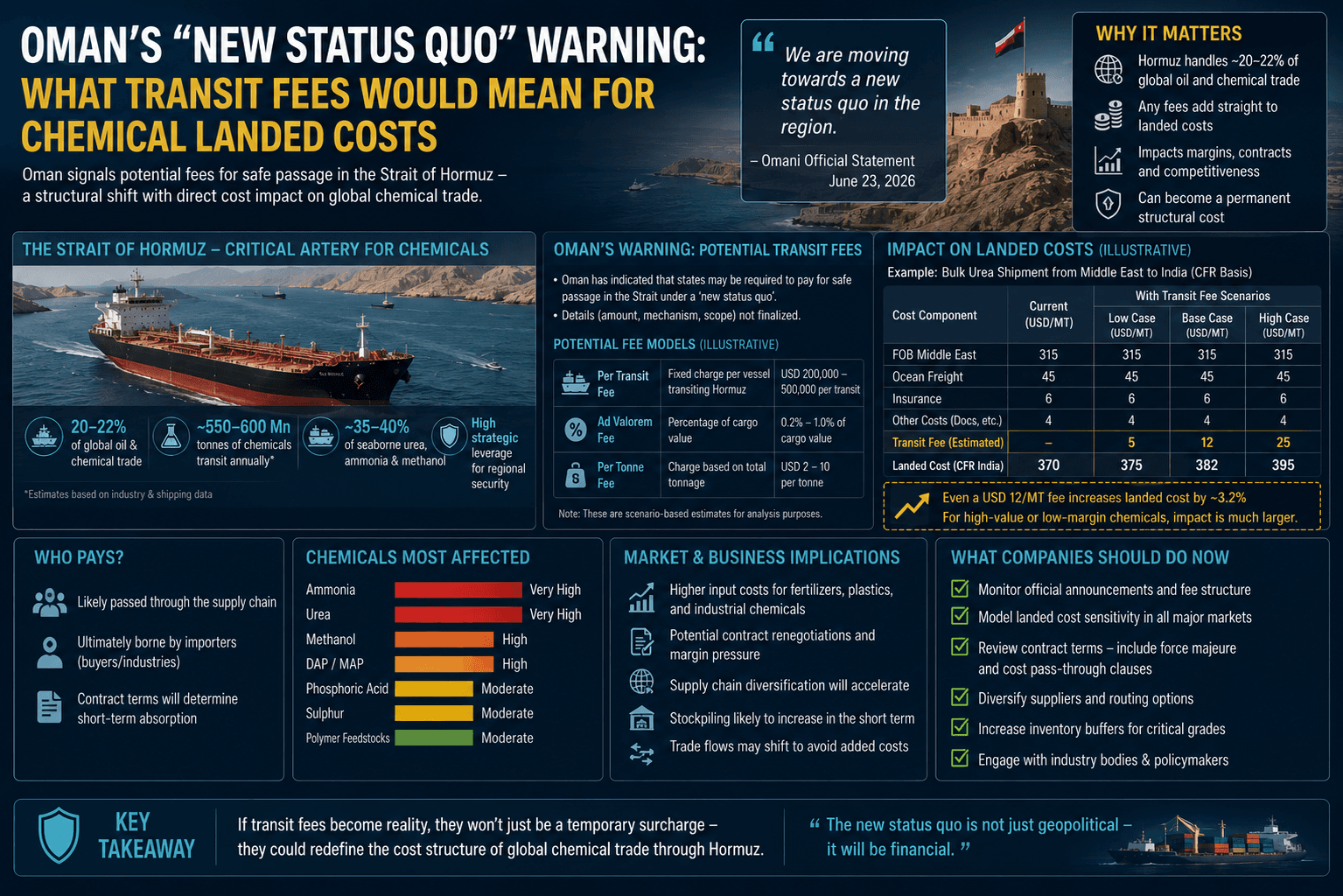
Oman’s warning that Hormuz may never return to pre-war conditions raises the prospect of permanent transit fees for commercial vessels. Chemical buyers should immediately model higher landed costs into H2 2026 procurement planning as Gulf shipping economics may have changed permanently.
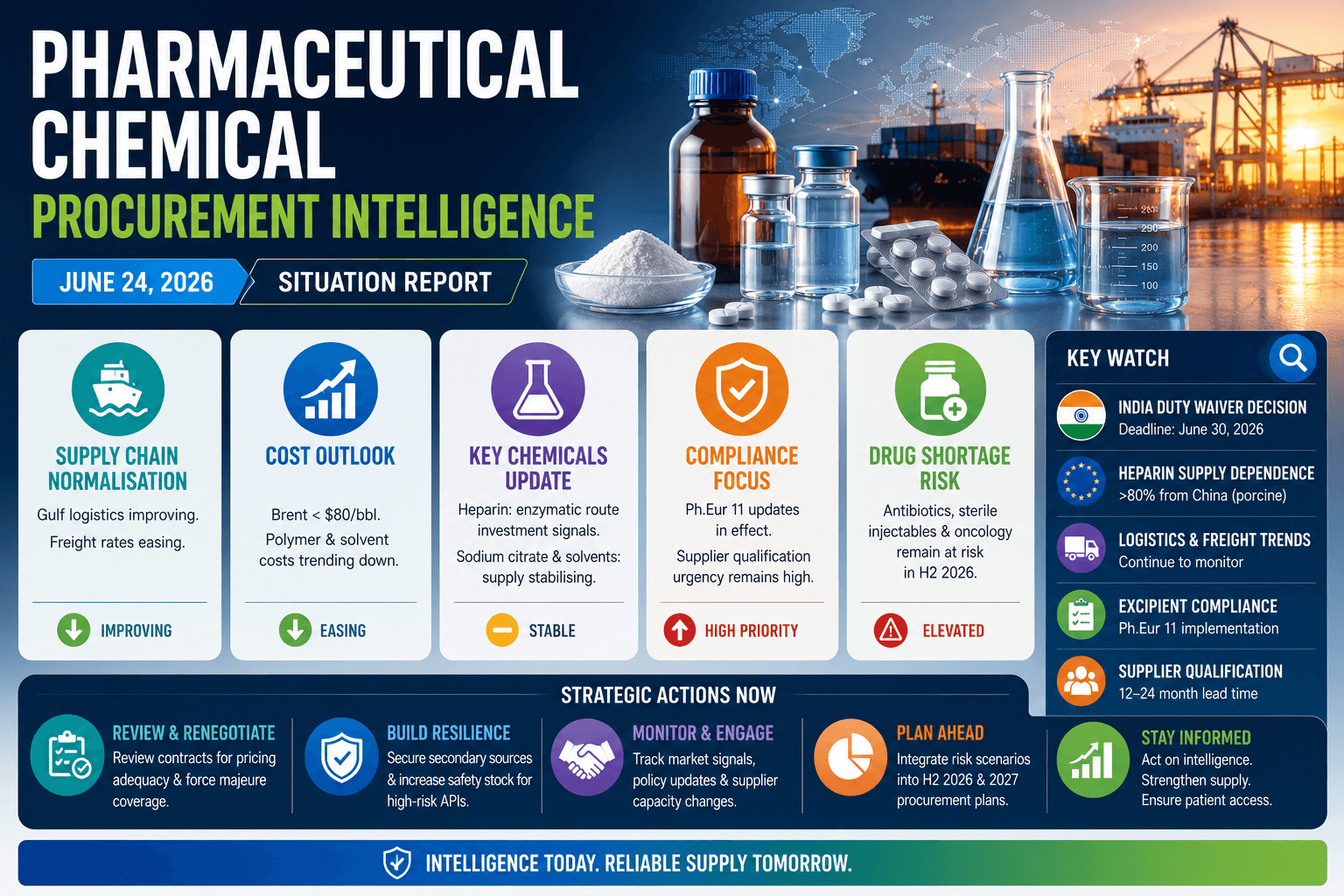
Pharmaceutical procurement teams face an unusually complex H2 2026 environment shaped by GLP-1 manufacturing demand, excipient compliance changes, freight cost shifts, regulatory deadlines, and elevated drug shortage risk across critical therapeutic categories.

As the Hormuz crisis reshapes global oil flows, India’s ONGC is evaluating Venezuelan crude to secure feedstock for its expanding refinery network. This move signals a broader strategy to diversify imports and stabilize the country’s petrochemical supply chain by 2026.
We're committed to your privacy. Tradeasia uses the information you provide to us to contact you about our relevant content, products, and services. For more information, check out our privacy policy.