
Bitumen
- IUPAC Name
- bitumen (petroleum asphalt)
- Molecular Formula
- Complex hydrocarbon mixture
- Synonyms & Trade Names
- Bitumen; Asphalt; Bituminous material
- Purity / Assay (%)
- Penetration grade
- Grade / Quality Level
- Industrial Grade
- Physical Form
- Solid
Technical Document
About Bitumen
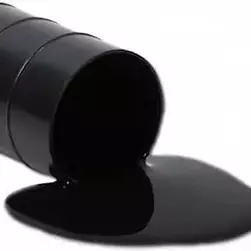
Bitumen, also known as asphalt, is a black, sticky, and viscous semi-solid or liquid form oil-based substance. It is a semi-solid substance and is stable at ambient temperatures. There are six major kinds of bitumen according to their applications: paving grade bitumen, cutback bitumen, bitumen emulsions, modified bitumen, polymer modified binders, and multi-grade bitumen. Asphaltic bitumen is valued for a variety of properties. It is water-proof, ductile, adhesive, chemically inert, and resistant to atmospheric exposure and the effects of dilute acids and alkalis. Obtained from the residues of naphthenic crude oils after distillation of the volatile products, it is marketed in a wide range of grades, ranging from soft to hard.
Bitumen distributors and bitumen suppliers play a crucial role in the supply chain, ensuring the availability of various grades of bitumen to meet different industry needs.
Manufacturing Process
Bitumen is manufactured through a fractional distillation process from selected crude oils. The crude oil is first heated to between 300°C and 350°C. The lightest fraction is then isolated through vaporization. Next, through the process of vacuum flashing or vacuum distillation of atmospheric residue from the vacuum distillation column, bitumen is obtained.