
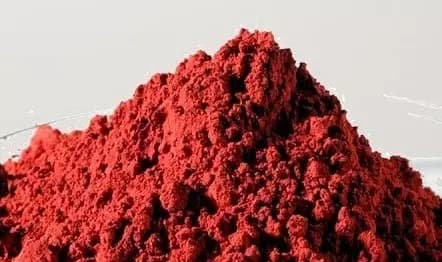
Copper (I) Oxide
Technical Document
Brief Overview Copper(I) oxide or commonly known as cuprous oxide usually has a bright, rich red color. It is one of the members of the copper and copper oxide family. It is covalent in nature. Copper(I) oxide crystallizes in a cubic structure. It is easily reduced by hydrogen when heated It undergoes disproportionation in acid solutions producing copper(II) ions and copper. Due to it being a copper derivative, it acts as a good corrosion resistance. The reactions at the surface between the copper and the oxygen in air to give a thin protective oxide layer. Cuprous oxide is presented in nature in the form of cuprite. It can be obtained through adding appropriate amount of hydrazine hydrate into the copper acetate solution or adding the reducing agent such as glucose to the alkaline solution (add sodium potassium tartrate or citrate to prevent the precipitation of copper hydroxide) of copper salt. According to the preparation method and particle size, cuprous oxide has different sizes including yellow, red or brown colors. Manufacturing Process There are different methods to obtain copper(I) oxide, and the most direct way is via oxidation of copper metal. 4 Cu + O2 → 2 Cu2O Aside from this, it can be produced commercially by reduction of copper(II) solutions with sulfur dioxide. The third method can be through drying of copper powder, after the removal of impurities, and mixing it with copper oxide and sent into the calcination furnace for being heated to 800~900 ℃ to be calcined into cuprous oxide. Cu + CuO → Cu2O