
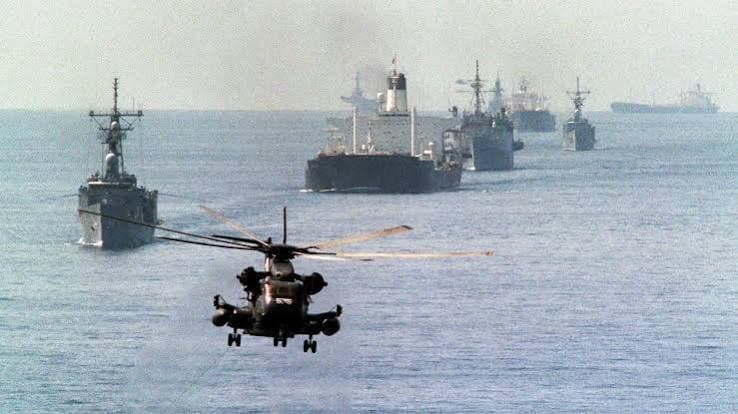
As military escort operations become increasingly established in the Strait of Hormuz, attention across the shipping industry is shifting from naval operations to marine insurance. While convoy systems improve operational security for commercial vessels, they also influence how insurers evaluate the level of risk associated with Gulf transits.
For chemical shippers, the coming weeks may become one of the most important insurance review periods since the Hormuz crisis began. Quarterly underwriting meetings provide insurers with an opportunity to reassess evolving operational conditions and determine whether existing war risk policies continue reflecting the current security environment.
Why War Risk Coverage Changed During the Crisis
At the height of the Hormuz disruption, several marine insurers reassessed their exposure to vessels operating within the region.
Many Protection and Indemnity (P&I) clubs activated contractual provisions allowing war risk cover to be withdrawn or modified under extraordinary conflict conditions.
These decisions reflected rapidly changing operational circumstances including:
Increased military activity.
Elevated risks to commercial shipping.
Higher uncertainty regarding vessel safety.
Greater potential insurance exposure.
For many shipowners, additional war risk insurance or alternative cover became necessary before vessels could continue operating in affected waters.
The 72-Hour Cancellation Clause
War risk insurance differs from many conventional marine insurance policies.
Many contracts include a 72-hour cancellation clause, allowing insurers to revise or terminate war risk cover when conflict conditions change significantly.
This mechanism provides insurers with flexibility to respond rapidly to evolving security risks rather than remaining bound by long-term premium assumptions.
During H1 2026, these clauses became an important feature of risk management across the Gulf shipping market.
Convoy Operations Change the Risk Assessment
The introduction of organised naval escort operations creates a materially different operating environment from that experienced during the peak of the crisis.
Although convoy participation does not eliminate operational risk, it provides several factors that insurers traditionally consider positively:
Coordinated vessel movements.
Enhanced maritime security.
Improved communication with naval authorities.
Better voyage monitoring.
Reduced exposure to isolated navigation.
These developments may support a reassessment of the overall risk profile for escorted commercial transits.
Quarterly Underwriting Reviews Are a Key Milestone
Marine insurers generally conduct periodic underwriting reviews to evaluate changing market conditions and adjust premium structures where appropriate.
The first major review period of H2 is particularly significant because it follows measurable improvements in Gulf shipping operations.
During these assessments, insurers may evaluate:
Current maritime security conditions.
Convoy operational performance.
Claims experience.
Vessel traffic trends.
Updated actuarial risk models.
The conclusions reached during these reviews will influence insurance availability throughout the coming quarter.
Coverage Terms May Evolve Rather Than Fully Normalise
A changing risk environment does not necessarily mean an immediate return to pre-crisis insurance conditions.
Instead, insurers often respond gradually by modifying premium structures or introducing revised underwriting conditions.
Potential developments may include:
Continued availability of convoy-specific cover.
Reduced war risk premium multipliers compared with peak crisis levels.
Additional operational conditions attached to coverage.
Enhanced reporting requirements for insured voyages.
For chemical shippers, understanding these evolving terms is just as important as monitoring freight rates or vessel schedules.
Premiums May Moderate Without Returning to Pre-Crisis Levels
While convoy operations improve the security environment, insurers are unlikely to immediately restore pre-crisis pricing.
Instead, the more probable outcome is a gradual adjustment reflecting lower—but not eliminated—risk.
Possible market developments include:
Reduced war risk premiums for convoy-participating vessels.
Continued premium differentiation between escorted and non-escorted voyages.
Ongoing voyage notification requirements.
Higher underwriting scrutiny for Gulf transits.
Continued monitoring of regional security developments before further premium reductions.
For many operators, the transition is expected to move from emergency pricing toward a more sustainable—but still elevated—insurance environment.
Insurance Is Becoming a Strategic Procurement Variable
Marine insurance is increasingly influencing procurement economics alongside freight rates and commodity pricing.
For buyers purchasing chemicals under CIF (Cost, Insurance and Freight) or CFR (Cost and Freight) terms, changes in insurance premiums directly affect landed costs and supplier competitiveness.
Procurement teams should therefore monitor:
War risk insurance premiums.
Carrier routing policies.
Convoy participation eligibility.
Marine insurance availability.
Total landed cost rather than freight rates alone.
Integrating insurance into procurement analysis provides a more accurate understanding of overall sourcing costs.
Convoy Operations Could Improve Market Confidence
One of the most significant commercial effects of convoy operations may be psychological rather than operational.
As insurers gain confidence in escorted navigation, the shipping market may experience:
Greater willingness among shipowners to accept Gulf voyages.
Improved vessel availability.
More competitive charter rates.
Reduced uncertainty in contract negotiations.
Higher confidence across chemical supply chains.
Although these improvements will develop gradually, they represent an important step toward restoring normal commercial conditions.
Looking Ahead to H2 2026
The July underwriting review period represents one of the first opportunities for marine insurers to reassess Hormuz risk using operational evidence rather than crisis assumptions. The introduction of organised convoy operations has materially changed the risk environment by improving vessel protection, navigation oversight and voyage monitoring, providing insurers with a stronger basis for evaluating future coverage.
For chemical shippers, the outcome is unlikely to be a simple return to pre-crisis insurance conditions. A more realistic expectation is a phased transition toward revised coverage models that recognise the lower risk associated with escorted voyages while continuing to reflect the region's residual geopolitical uncertainty. Premiums may ease, but they are likely to remain above historical norms until long-term maritime stability is established.
The key message for procurement and logistics professionals is clear: treat marine insurance as a strategic component of supply chain planning. Companies that actively engage with their P&I clubs, understand evolving coverage terms and incorporate insurance costs into landed-cost calculations will be better positioned to manage chemical shipments through the Gulf during H2 2026.
Ready to source industrial and specialty chemicals from verified global suppliers? Explore competitive offers on our platform today.
Monoethylene glycol CAS: 107-21-1